
5 tips to get the most out of Nutritional Therapy

As a functional nutrition therapy practitioner and an Autoimmune Paleo (AIP) Certified Coach, it’s my passion to help clients with chronic health conditions improve their health and well-being through dietary and lifestyle changes. I regularly support clients with conditions such as Hashimoto’s disease, hypothyroidism, rheumatoid arthritis (RA), and multiple sclerosis (MS), helping them to implement dietary and lifestyle approaches that address the root causes of their symptoms.
If you’re struggling with your health or have been diagnosed with an autoimmune disease, nutritional therapy could be the missing link to getting your life back. Click here to learn how four of my nutrition clients reduced their autoimmune symptoms by an average of 74 per cent, and book your free 30-minute health review to get started.
Here are five tips to help you get the most out of nutritional therapy: a proven approach to managing chronic disease, reducing autoimmune symptoms, and improving your overall quality of life.
1. Understand the power of personalised nutrition
What we eat significantly impacts our health and well-being, as certain foods drive inflammation in the body, disrupt the balance of bacteria in the gut, and increase intestinal permeability (a risk factor for autoimmune disease). Examples include ultra-processed packaged foods, refined sugars, gluten, and dairy.
Many other foods can help decrease inflammation in the body, heal a leaky gut, and strengthen the immune system. Examples of these foods include fresh fruits and vegetables; meat, poultry, and seafood; and certain herbs and spices. The right diet for you, however, depends on many different factors.
This is why I commonly recommend functional lab testing, personalised nutrition programmes, and individualised elimination diets like the Autoimmune Protocol (AIP) in my nutrition practice. The Autoimmune Protocol (AIP diet) is one of my preferred approaches for those with autoimmune diseases and other chronic health conditions, which may include Core or Modified AIP. Depending on your specific situation, other elimination diets such as the Wahls protocol, a dairy-free diet, or a gluten-free diet may be recommended.
2. Prepare a list of questions in advance
As you prepare for your first nutritional therapy appointment with me (and any subsequent appointments), I recommend coming up with a list of questions to address during our time together. While I’m happy to answer short or urgent questions between appointments with clients, time constraints prevent me from answering multiple questions and responding to frequent or lengthy emails.
A note regarding commonly asked questions
I address commonly asked questions on my nutrition blog, Instagram, and Facebook pages, so please check those out if you haven’t already. As new questions arise, feel free to make note of them and email them to me in advance of your next scheduled appointment.
3. Track your symptoms, food intake, and lifestyle
Symptom, food, and lifestyle tracking are integral parts of functional nutrition, as this helps nutritional therapists understand the symptoms you’re experiencing and look for modifiable lifestyle factors that could be affecting your health. I recommend using a journal, food log, or note-taking app to keep track of the following:
- General symptoms related to gut health, cognition, skin, pain, energy levels, immunity, and emotions
- Foods and beverages consumed throughout each day (and how much)
- Symptoms before, during, and after meals
- Current supplements or medications (along with dosages)
- Physical activities (including when and how much)
- Sleep (including naps and the quantity and quality of nightly sleep)
Food, symptom, and lifestyle tracking can also help you identify potential food triggers, build healthy habits, monitor your progress, and celebrate small wins. Just remember to bring along your notes to each nutritional therapy appointment so I can review them and make any necessary changes to your programme.
4. Monitor symptoms and make changes as needed
When starting a new supplement protocol; eliminating and introducing certain foods; or using botanicals to address things like parasites, fungal infections, viruses, and mycotoxins, it’s quite common to experience temporary side effects (or die-off symptoms known as Herxheimer reactions). However, while these reactions are usually mild and short-lived, this doesn’t necessarily mean you should push through.
If you happen to experience a reaction to a supplement between appointments, please discontinue its use and make thorough notes describing your symptoms. We will discuss this at your next consultation and determine whether the supplement should be reintroduced or stopped altogether.
The same goes for food reactions. If you think you’re reacting to a food item or dietary change, stop eating the food in question, take thorough notes, and we’ll discuss your concerns at our next appointment.
Potential relief for Herxheimer symptoms
If you experience mild side effects after starting a new diet or supplement routine, you may be able to push through by increasing your water intake, using an infrared sauna, and soaking in Epsom salt baths. These strategies can help to induce detoxification, relax the body, and reduce Herxheimer symptoms.
5. Put in the work
Changing your diet isn’t always easy, but it’s well worth the effort you’ll put in. There’s a growing body of research that supports the efficacy of the AIP diet for autoimmune conditions like RA, Hashimoto’s, inflammatory bowel disease (IBD), MS, and lupus, and we’re learning more and more about how gluten — a protein found in wheat, barley, and rye — increases oxidative stress, inflammation, and intestinal permeability.
What’s more, a recent study published in The BMJ linked ultra-processed foods to 32 adverse health outcomes such as cardiometabolic disease, depression, and all-cause mortality. Of course, consuming ultra-processed foods has also been associated with intestinal permeability and an increased risk of developing celiac disease, type 1 diabetes, and IBD. The good news is that avoiding certain foods — even temporarily — and eating a diet rich in whole foods can fight inflammation, reduce oxidative stress, and improve our overall health and well-being.
Ready to explore a tailored approach? Book a free 20-minute inquiry call today and let’s work together on a path to better health.
References:
Recent blog articles
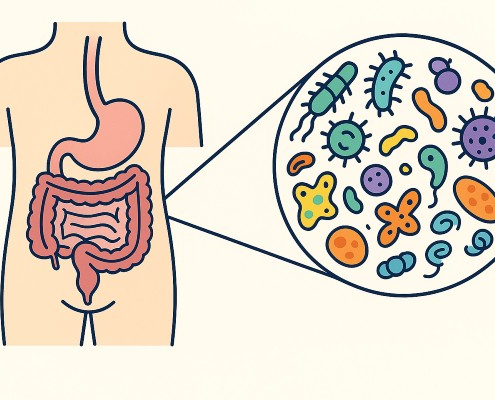 https://www.annapinnock.co.uk/wp-content/uploads/2026/05/microbiome-3.jpg
400
640
apinnock
https://annapinnock.co.uk/wp-content/uploads/2017/09/logo_Anna-Pinnock-t2.png
apinnock2026-05-08 15:37:582026-05-08 15:57:46What is the gut microbiome – and why should you care?
https://www.annapinnock.co.uk/wp-content/uploads/2026/05/microbiome-3.jpg
400
640
apinnock
https://annapinnock.co.uk/wp-content/uploads/2017/09/logo_Anna-Pinnock-t2.png
apinnock2026-05-08 15:37:582026-05-08 15:57:46What is the gut microbiome – and why should you care? https://www.annapinnock.co.uk/wp-content/uploads/2026/04/Understanding-SIBO-and-IMO.jpg
400
640
apinnock
https://annapinnock.co.uk/wp-content/uploads/2017/09/logo_Anna-Pinnock-t2.png
apinnock2026-04-30 14:44:492026-05-01 11:58:39Understanding SIBO & IMO: a hidden cause of gut trouble
https://www.annapinnock.co.uk/wp-content/uploads/2026/04/Understanding-SIBO-and-IMO.jpg
400
640
apinnock
https://annapinnock.co.uk/wp-content/uploads/2017/09/logo_Anna-Pinnock-t2.png
apinnock2026-04-30 14:44:492026-05-01 11:58:39Understanding SIBO & IMO: a hidden cause of gut trouble https://www.annapinnock.co.uk/wp-content/uploads/2026/03/which-diet-for-Hashimotos-e1773847589694.jpg
400
640
apinnock
https://annapinnock.co.uk/wp-content/uploads/2017/09/logo_Anna-Pinnock-t2.png
apinnock2026-03-19 16:05:202026-03-25 16:28:10Hashimoto’s and diet: what does the research actually say?
https://www.annapinnock.co.uk/wp-content/uploads/2026/03/which-diet-for-Hashimotos-e1773847589694.jpg
400
640
apinnock
https://annapinnock.co.uk/wp-content/uploads/2017/09/logo_Anna-Pinnock-t2.png
apinnock2026-03-19 16:05:202026-03-25 16:28:10Hashimoto’s and diet: what does the research actually say?


