
Gluten-free diets: What to know
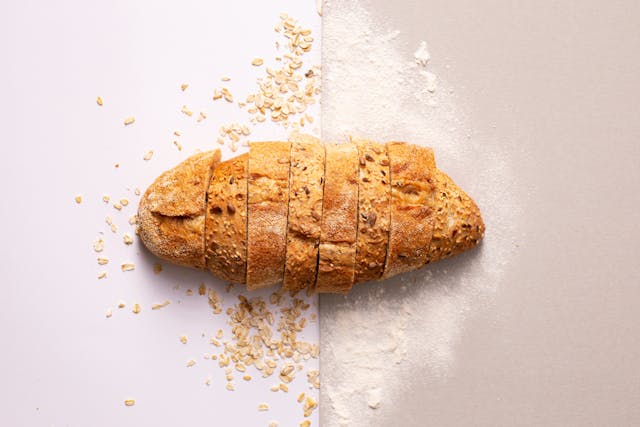
Photo by Pexel
Many people associate gluten-free diets with celiac disease (or gluten-sensitive enteropathy), an autoimmune condition that affects about 1 in 100 people worldwide. Celiac patients must follow a strict gluten-free diet for the rest of their lives, as ingesting even trace amounts of gluten (a protein found in wheat, barley, and rye) can trigger an autoimmune attack against the small intestine — damaging the small intestine and making patients more susceptible to developing other chronic diseases.
That said, several other conditions have also been associated with gluten sensitivity and gluten intolerance. For example, non-celiac gluten sensitivity occurs in those with sensitivities to gluten (and possibly wheat), but without celiac disease or true wheat allergies. Other conditions like leaky gut syndrome and various autoimmune diseases can also be impacted by gluten ingestion.
In this blog post, we’ll take a closer look at what it means to adopt a gluten-free diet: a diet that excludes gluten-containing foods like wheat, barley, and rye.
Understanding celiac and non-celiac gluten sensitivity
Celiac disease is an autoimmune condition that requires lifelong avoidance of gluten-containing foods, as the only treatment for celiac disease is strict gluten avoidance. Celiac patients are advised to consume no more than 10 to 50 milligrams of gluten daily, and food products must contain no more than 20 parts per million (ppm) of gluten to be marketed as gluten-free. To give a tangible analogy, 20 milligrams is roughly equivalent to the weight of a grain of salt or sugar.
While the treatment for non-celiac gluten sensitivity is the same as for celiac disease, NCGS could be reversible after following a strict gluten-free diet for one to two years. This means that patients with NCGS may be able to reintroduce gluten at some point, depending on their unique root causes of gluten sensitivity and other factors such as the following:
- Symptoms: Patients with gluten sensitivity often experience intestinal symptoms like gas, bloating, diarrhoea, abdominal pain, and constipation — and other symptoms like brain fog, fatigue, headache, anxiety, body pain, and skin rashes. Those with NCGS may be able to reintroduce gluten if symptoms subside, while others may choose to follow a gluten-free diet indefinitely.
- Lab markers: In my nutritional therapy practice, I use medical symptom questionnaires and functional lab tests to track symptoms, make dietary recommendations, and help clients determine whether a gluten-free diet is right for them. Several lab markers that can be used to assess gluten sensitivity include zonulin, antigliadin antibodies, and Alcat food sensitivity testing. MicroRNA, incRNA, and other biomarkers can also be useful when diagnosing and managing non-celiac gluten sensitivity. It’s important to note that testing for NCGS isn’t standardised, as there are numerous potential underlying causes that cannot be identified with a single test.
Book a free health review with me to learn more about food sensitivity testing.
Gluten, wheat, leaky gut, and AIP
So, what is it that makes gluten-containing foods and snacks so problematic for people with non-celiac gluten sensitivity? For some people, it’s a sensitivity to the proteins in wheat, rye, and barley products. These include gluten and non-gluten proteins such as:
- Gliadin and glutenin (the two proteins that makeup gluten).
- Globulins, serpins, farinins, amylase/protease inhibitors, and purinins (non-gluten proteins in wheat, barley, and rye).
Interestingly, some patients with non-celiac gluten sensitivity are more sensitive to the non-gluten proteins in wheat than they are to gluten proteins themselves. Still, the terms non-celiac gluten sensitivity and non-celiac wheat sensitivity are used interchangeably.
For other people with NCGS, gut dysbiosis and increased intestinal permeability (leaky gut) are at the root of the problem — and gluten or wheat sensitivity may actually be a symptom of intestinal inflammation. In these cases, gut dysbiosis and leaky gut must be addressed in addition to adopting a gluten and wheat-free diet.
That said, it’s important to note that gluten can increase intestinal permeability even in healthy subjects. And since intestinal permeability is a trigger for autoimmunity, it makes sense that most people with autoimmune conditions would benefit from adopting a gluten-free diet, at least for a short period of time — even those who don’t have celiac disease.
Like NCGS, those with autoimmune conditions (excluding celiac disease) don’t necessarily need to avoid gluten indefinitely if they think gluten could be contributing to their symptoms. This is why I commonly recommend following an elimination diet like the Autoimmune Protocol (AIP) or other less restrictive types of elimination diets (such as gluten-, dairy- and soy-free) in my practice. This consists of a 30 to 90-day elimination phase, helping patients identify problematic foods and create a personalised diet based on their specific needs.
What it means to follow a gluten and wheat-free diet
Now that we’ve talked about celiac disease and non-celiac gluten sensitivity, let’s discuss what it means to follow a gluten and wheat-free diet.
In its simplest form, following a gluten-free diet means avoiding gluten-containing foods such as wheat; wheat derivatives like wheat berries, durum, semolina, spelt, farro, and graham; and other gluten-containing grains like rye and barley. Other sources of gluten commonly include malt, triticale, brewer’s yeast, pasta noodles, crackers, breads, beer, tortillas, and many other pre-packaged or heavily processed foods.
A few naturally gluten-free foods to incorporate while following a gluten and wheat-free diet include:
- Whole grains like sorghum, quinoa, buckwheat, amaranth, corn, millet, and brown rice.
- Oats labelled as gluten-free.
- Legumes like beans, lentils, and peas.
- Raw, unflavored nuts and seeds such as flax, chia, almonds, cashews, walnuts, and pistachios.
- Fresh fruits and vegetables.
- Fresh meat, poultry, fish, seafood, and dairy (choose unprocessed or minimally processed food sources when possible, as ultra-processed foods often include gluten or wheat).
If you’re interested in learning more about how a gluten-free diet can help you improve your symptoms, contact me to book a free 20-minute inquiry call. I know there’s a lot of confusion around gluten-free diets (for example, it’s a common misconception that gluten-free and vegan mean the same thing), so be sure to follow me on Instagram for more information on gluten sensitivity and gluten-free diets.
Ready to learn more about how a gluten-free diet can benefit you? Book a free 20-minute inquiry call and let’s work together to regain control of your health!
References:
- https://drruscio.com/validation-non-celiac-gluten-sensitivity/
- Wentz, I. (2017). Hashimoto’s protocol. HarperOne.
- https://www.ncbi.nlm.nih.gov/pmc/articles/PMC6363368/
- https://www.beyondceliac.org/research-news/are-you-always-gluten-sensitive-for-life/
- https://www.ncbi.nlm.nih.gov/pmc/articles/PMC6182669/
- https://pubmed.ncbi.nlm.nih.gov/36244620/
- https://academic.oup.com/biohorizons/article/doi/10.1093/biohorizons/hzx015/4670557?login=false
- https://celiac.org/gluten-free-living/gluten-free-foods/
Recent blog articles
 https://www.annapinnock.co.uk/wp-content/uploads/2026/05/microbiome-3.jpg
400
640
apinnock
https://annapinnock.co.uk/wp-content/uploads/2017/09/logo_Anna-Pinnock-t2.png
apinnock2026-05-08 15:37:582026-05-08 15:57:46What is the gut microbiome – and why should you care?
https://www.annapinnock.co.uk/wp-content/uploads/2026/05/microbiome-3.jpg
400
640
apinnock
https://annapinnock.co.uk/wp-content/uploads/2017/09/logo_Anna-Pinnock-t2.png
apinnock2026-05-08 15:37:582026-05-08 15:57:46What is the gut microbiome – and why should you care? https://www.annapinnock.co.uk/wp-content/uploads/2026/04/Understanding-SIBO-and-IMO.jpg
400
640
apinnock
https://annapinnock.co.uk/wp-content/uploads/2017/09/logo_Anna-Pinnock-t2.png
apinnock2026-04-30 14:44:492026-05-01 11:58:39Understanding SIBO & IMO: a hidden cause of gut trouble
https://www.annapinnock.co.uk/wp-content/uploads/2026/04/Understanding-SIBO-and-IMO.jpg
400
640
apinnock
https://annapinnock.co.uk/wp-content/uploads/2017/09/logo_Anna-Pinnock-t2.png
apinnock2026-04-30 14:44:492026-05-01 11:58:39Understanding SIBO & IMO: a hidden cause of gut trouble https://www.annapinnock.co.uk/wp-content/uploads/2026/03/which-diet-for-Hashimotos-e1773847589694.jpg
400
640
apinnock
https://annapinnock.co.uk/wp-content/uploads/2017/09/logo_Anna-Pinnock-t2.png
apinnock2026-03-19 16:05:202026-03-25 16:28:10Hashimoto’s and diet: what does the research actually say?
https://www.annapinnock.co.uk/wp-content/uploads/2026/03/which-diet-for-Hashimotos-e1773847589694.jpg
400
640
apinnock
https://annapinnock.co.uk/wp-content/uploads/2017/09/logo_Anna-Pinnock-t2.png
apinnock2026-03-19 16:05:202026-03-25 16:28:10Hashimoto’s and diet: what does the research actually say?


