What is the gut microbiome — and why should you care?
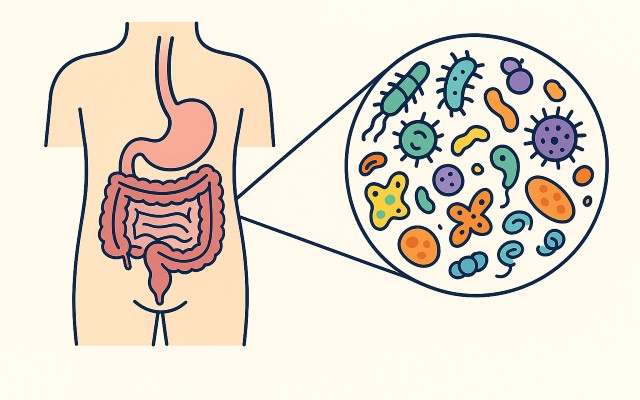
If you’ve been hearing a lot about the gut microbiome lately, you’re not alone. But what actually is it, and why does it matter so much for your health? The short answer: it may be one of the most important ecosystems on the planet — and it lives inside you.
Meet your inner world
Your gut microbiome is the vast community of around 100 trillion microorganisms — bacteria, yeasts, viruses, and fungi — living primarily in your large intestine. To put that in perspective, these microbes are roughly equivalent in number to your own human cells. Scientists now consider the microbiome almost like an organ in its own right, so influential is its impact on your health and how you feel day to day.
What’s particularly remarkable is that your microbiome can be as influential as your genes. Identical twins can have vastly different microbiomes, and those differences correlate with real differences in health outcomes. That’s both humbling and empowering — because unlike your DNA, your microbiome is something you can actively shape.
The gut is just the beginning: your body’s many microbiomes
While the gut microbiome rightly commands the most attention, it is far from the only microbial community that shapes your health. The human body hosts several distinct microbiomes, each with its own ecosystem and influence.
The oral microbiome — comprising over 700 bacterial species — is the second largest in the body, and disruption here has been linked not just to tooth decay and gum disease, but to systemic conditions including cardiovascular disease and, more recently, Alzheimer’s disease, via pathways involving the bacterium Porphyromonas gingivalis.
The vaginal microbiome is unique among body sites in that a healthy state is characterised by low diversity, dominated by Lactobacillus species — particularly L. crispatus — which maintain an acidic environment protective against infections; disruptions to this balance are associated with bacterial vaginosis, increased susceptibility to sexually transmitted infections, and higher risk of preterm birth.
The skin microbiome, spread across roughly 1.8 square metres of body surface, acts as a physical and immunological barrier; imbalances in skin microbial communities are increasingly implicated in conditions such as eczema, psoriasis, acne, and rosacea — and are closely linked to the gut via the gut–skin axis.
Finally, the lung microbiome — long assumed to be sterile — is now known to harbour its own distinct microbial community, and dysbiosis here is associated with conditions including asthma, COPD, and heightened susceptibility to respiratory infections. Critically, these microbiomes do not operate in isolation: they communicate with one another and with the gut through shared immune pathways, the nervous system, and circulating metabolites, which is why supporting gut health so often has ripple effects felt across the whole body.
It’s possible to test your oral and vaginal microbiomes. Please get in touch if you’d like to find out more.
What your friendly gut bacteria actually do
When your gut microbiome is in good balance, your bacteria are quietly working behind the scenes every single day. Their contributions include:
- Digestion and nutrient absorption — they help break down fibres your body cannot digest alone, releasing nutrients and producing short-chain fatty acids (SCFAs) that nourish your gut lining.
- Immune regulation — around 70–80% of your immune system lives in your gut. Friendly bacteria act as gatekeepers, helping your immune cells distinguish between friend and foe.
- Mental health and mood — your gut produces approximately 95% of your body’s serotonin. A disrupted microbiome is increasingly linked to anxiety, low mood, and brain fog.
- Hormone regulation — your gut bacteria help metabolise and recycle oestrogen and other hormones, meaning microbiome imbalances can show up as hormonal symptoms.
- Skin health — the gut–skin axis is a well-established pathway: inflammation starting in the gut can manifest as acne, eczema, rosacea, or psoriasis.
- Protection against pathogens — a diverse microbiome crowds out harmful organisms and produces compounds that inhibit unfriendly bacteria.
When things go wrong: dysbiosis
A healthy gut has roughly 85% beneficial bacteria to 15% potentially harmful organisms. When this balance tips, the result is called dysbiosis — a state increasingly linked to a wide range of conditions, from IBS and inflammatory bowel disease to autoimmune conditions, anxiety, skin disorders, and metabolic issues.
Common drivers of dysbiosis include antibiotic use, a diet high in sugar and processed foods, chronic stress, poor sleep, alcohol, infections, and certain medications.
How to nurture a healthy microbiome
- Eat 30 or more different plant foods per week — diversity in what you eat drives diversity in your microbiome.
- Prioritise fibre from a range of sources: chia seeds, flaxseeds, vegetables, legumes, wholegrains.
- Include fermented foods daily: live yoghurt, kefir, sauerkraut, kimchi, kombucha, miso.
- Reduce ultra-processed foods, refined sugar, and excess alcohol.
- Manage stress actively — the gut–brain axis works both ways, and chronic stress directly disrupts the microbiome.
- Prioritise sleep — your gut bacteria follow circadian rhythms too.
Could a stool test help?
If you’ve been experiencing symptoms like bloating, irregular bowel movements, fatigue, skin issues, hormonal imbalances, or have an autoimmune condition, a comprehensive stool test like the Microbiome Explorer can provide helpful insight into what is actually happening in your gut. As a nutritional therapist specialising in autoimmune conditions and gut health, I work with clients to interpret these results and build personalised protocols that address the root cause. If you’d like to explore what your gut microbiome might be telling you, I’d be glad to help.
Book a free 20-minute inquiry call and let’s have a chat.
Recent posts
Recent blog articles
 https://www.annapinnock.co.uk/wp-content/uploads/2024/09/nutritional-deficiencies-autoimmunity-why-they-matter-e1730983825318.jpg
800
1280
apinnock
https://annapinnock.co.uk/wp-content/uploads/2017/09/logo_Anna-Pinnock-t2.png
apinnock2024-09-11 10:48:402025-02-14 12:20:36Nutritional deficiencies in autoimmunity & why they matter
https://www.annapinnock.co.uk/wp-content/uploads/2024/09/nutritional-deficiencies-autoimmunity-why-they-matter-e1730983825318.jpg
800
1280
apinnock
https://annapinnock.co.uk/wp-content/uploads/2017/09/logo_Anna-Pinnock-t2.png
apinnock2024-09-11 10:48:402025-02-14 12:20:36Nutritional deficiencies in autoimmunity & why they matter https://www.annapinnock.co.uk/wp-content/uploads/2024/11/nutritional-therapy-appointment-tips-e1739880339580.jpg
400
640
apinnock
https://annapinnock.co.uk/wp-content/uploads/2017/09/logo_Anna-Pinnock-t2.png
apinnock2024-08-09 07:56:402025-02-18 12:24:045 tips to get the most out of Nutritional Therapy
https://www.annapinnock.co.uk/wp-content/uploads/2024/11/nutritional-therapy-appointment-tips-e1739880339580.jpg
400
640
apinnock
https://annapinnock.co.uk/wp-content/uploads/2017/09/logo_Anna-Pinnock-t2.png
apinnock2024-08-09 07:56:402025-02-18 12:24:045 tips to get the most out of Nutritional Therapy https://www.annapinnock.co.uk/wp-content/uploads/2024/11/eating-for-hypothyroidism-3-myths-e1739880463331.jpg
400
640
apinnock
https://annapinnock.co.uk/wp-content/uploads/2017/09/logo_Anna-Pinnock-t2.png
apinnock2024-07-24 16:28:442025-02-18 12:18:103 myths around eating for hypothyroidism
https://www.annapinnock.co.uk/wp-content/uploads/2024/11/eating-for-hypothyroidism-3-myths-e1739880463331.jpg
400
640
apinnock
https://annapinnock.co.uk/wp-content/uploads/2017/09/logo_Anna-Pinnock-t2.png
apinnock2024-07-24 16:28:442025-02-18 12:18:103 myths around eating for hypothyroidism